The Rise of the ‘Snowflakes’
How Overprotection is Breeding a Fragile Generation
The Rise of the ‘Snowflakes’
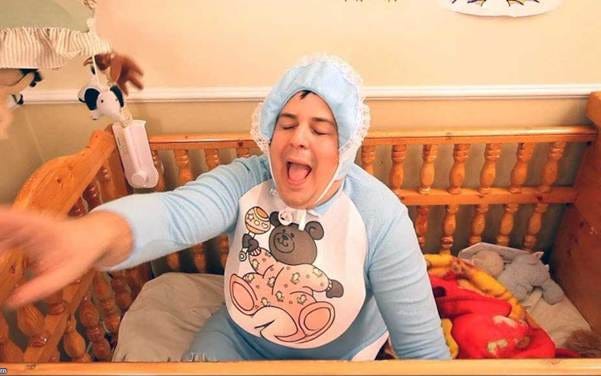
Let’s talk about “snowflakes”, shall we?
Look at our modern society and you will find them everywhere. A generational shift is taking place:
“Perceived fragility and entitlement”
I am sure we have all witnessed this phenomenon not only in our society as a whole, but also in personal encounters – I will mention a few examples later on.
In this article I will explore the alarming rise of what has been dubbed the “snowflake generation.” I will delve into its historical roots, I will try to find out the underlying causes such as overprotection and shielding from real-life challenges, and the not surprising result of difficulties in adult resilience. I will look into the factors that contribute to traits like fear of criticism, aversion to failure, external blame-shifting, and a dependency on institutions, no different to babies’ reliance on parents.
I know that the label is contentious, but it highlights debates on resilience, mental health, and generational dynamics. Yes, there is an opposing side that emphasizes empathy and adaptation, which of course is disconnected from reality because self-knowledge, is the only way that true empathy and adaptation can exist.
The Origins of the Term “Snowflake”
The slang “snowflake” describes the issue pretty accurately. It presents an overstated sense of uniqueness that is combined with emotional vulnerability that will literally ‘melt’ you. It became popular in the late 20th and early 21st centuries, although it started quite differently from what it is today.
Early uses in the 1860s by Missouri abolitionists used the term to refer to those who opposed the end of slavery. They used the term due to the story of the ‘Snow White,’ valuing white lives over Black ones. The opposite of what is promoted today, the swing of the pendulum to the other side, isn’t it?
By the 1970s, its meaning shifted to describe white individuals or Black people accused of “acting white.”

However, today, the term emphasizes ‘fragility,’ which is often attributed to Chuck Palahniuk’s 1996 novel Fight Club, where the protagonist mocks the notion of individuality with the line: “You are not special. You are not a beautiful and unique snowflake.” This was further amplified in the 1999 film adaptation, and Palahniuk later on claimed responsibility for popularizing it as a critique of over-praised youth fostering entitlement.
And here we are today. The term exploded in the 2010s, particularly after 2015, amid cultural debates on resilience. Claire Fox’s 2016 book ”I Find That Offensive!” cemented “Generation Snowflake” by referencing a 2015 Yale University incident where students confronted administrators over Halloween costumes deemed “culturally inappropriate”, another popular term today. An overly hysterical reaction, followed with the demand of “safe spaces.”
Collins English Dictionary recognized “snowflake generation” as a 2016 word of the year, defining it as young adults of the 2010s seen as less resilient and more offense-prone than prior generations.
Then, politically, it peaked after Brexit and the 2016 U.S. election, becoming, and for a good reason, a description of liberals, though ironically reversed on figures like Donald Trump, labelled “Snowflake-in-Chief” for perceived sensitivity to criticism.
The evolution of the term clearly reflects the broader societal shifts. We moved from the industrial-era stoicism to post-modern emphasis on self-esteem, setting the stage for critiques of modern youth. Although the self-esteem today is confused with the inability to listen to any criticism (constructive or not).
Overprotection and Helicopter Parenting

What has changed in the last few decades?
To start with, parenting. It is clearly the parenting styles that have fuelled the rise of snowflakes. Specifically, overprotection, “helicopter parenting,” where parents hover excessively, intervening in every aspect of a child’s life. This is the primary driver. Psychological studies clearly show that such a parenting style, during childhood, but even into emerging adulthood (18–25), negatively impacts resilience. How is that? It is common sense that if you limit exposure to difficulties during childhood, where the child’s personality is developed, you essentially prevent the child from developing coping mechanisms. And these years are crucial, as I discussed before, because of the neuroplasticity of the brain.
Research shows how helicopter parenting correlates with reduced career adaptability, increased career self-doubt, and a higher likelihood of identity statuses like “searching moratorium,” where individuals fluctuate in commitment and exploration, inevitably delaying independence. And I have plenty of examples in my own environment just in the past few years – coming below.
And the effects that you see in these adults include heightened anxiety, depression, lower self-efficacy, and minimal psychological adjustment. Why? Because these overprotected individuals lack the tools to navigate stressors independently. And they develop ‘boundaries,’ a popular term today, within which they feel comfortable and powerful in their delusional world, but unable to peek outside these boxes. And when they do? They blame others and they look at the government (or parents) to fix their issues…

Practices like participation trophies and no-fail policies further erode the ability to grow through adversity. Everybody wins, yeah! No, this is not how life is. To win, you have to put an effort and whoever puts the best effort wins. That’s life, that’s evolution, that’s nature. And yet, we teach our children that everyone wins, only until they become adults and then they are incapable of dealing with reality.
Socioeconomic factors also play a role. For example, higher SES parents often engage in overparenting due to fears of failure in competitive environments, exacerbating the issue.
What is clear is that the overall trend points to a generation less equipped for adult life’s demands.
Reduced Resilience and Difficulty with Adversity

Why is it so difficult to understand that overprotection deprives youth of “antifragile” growth?
Why is it so difficult to understand thousands-of-years-old common sense that challenges strengthen rather than break?
As adults, this is going to create profound difficulties. The fear of failure leads to avoidance of risks. Criticism triggers defensiveness or withdrawal. And blame-shifting prevents self-reflection.
Triggers are meant to serve as clues that highlight the areas you need to work on in order to grow as a human being, not as signals of what you should avoid. As I have written previously, avoiding your triggers is essentially avoiding the most important lessons and guidance that point to the inner work you need to do.
The end result is dependency on external entities, like government welfare, ‘experts’, the legal system or parental support, no different from the reliance of toddlers on their parents, stunting personal growth.
Overparenting is linked to increased internalizing symptoms like anxiety and depression, with studies confirming associations with mental health issues.
Key Traits of the Snowflake Generation
If you look closely at the snowflake generation, you will find a few clear traits.
An inflated sense of uniqueness, an entitlement without effort, and vulnerability to offense.
Snowflakes may demand accommodations for perceived slights, avoid discomfort at all costs, and expect societal structures to cushion their failures.
An absolute disaster that leads to cognitive dissonance, suicidal empathy, weakened national defence through aversion to necessary conflicts, declining educational standards from fear of rigorous challenges, erosion of family structures due to prolonged dependency, increased vulnerability to misinformation in echo chambers, stifled scientific progress from cancel culture’s suppression of debate, and countless other societal issues that plague our world today.
Resilience in Past Generations

If we look back in time, historically, earlier generations faced unshielded hardships that built fortitude. Think of the Great Depression era or World War II survivors who endured economic scarcity and global conflict without our modern safety nets.
What do you think would happen if we had a similar event taking place today? It would be total chaos.
Beyond the 1980s, we have seen a shift toward child-centred parenting. A shift that has been influenced by (pseudo) self-esteem movements, which introduced practices like participation trophies and no-score sports games. The intention of these movements?
To boost confidence … which is absolute madness. Boost confidence by minimizing all the challenges that … build confidence! In other words, creating unrealistic expectations of success without effort.
This completely contrasts with Victorian-era child-rearing, which emphasized discipline and early responsibility, or even mid-20th-century norms where children navigated independence sooner.
Recent Examples in Universities, Workplaces, and Society

On campuses, the demand for trigger warnings, safe spaces, and deplatforming speakers, such as the 2017 protests at universities like Evergreen State College against ‘perceived’ offensive views, just exemplify aversion to differing opinions, and this is where we get the label of snowflake behaviour. And it is exactly that.
Inability to listen to different opinions, to demonize anything different from your opinion, is a sure path to societal suicide.
In workplaces? We now see reports that highlight young employees struggling with constructive feedback, which results in higher turnover or demands for mental health accommodations without building tolerance. The 2020s have shown us an amplified sensitivity in cancel culture, you know, where social media outrage leads to job losses over minor infractions, and even high-profile withdrawals like athletes Simone Biles and Naomi Osaka from competitions citing mental health. Madness!
A 2024 study noted a 123% increase in mental disorder diagnoses over a decade. This is linked to lowered thresholds for distress and not true pathology. And then, our Big Pharma will of course take advantage of it, and we now see an over-reliance on medications for everyday challenges.
Everything to help with avoiding growing through difficulty.
Personal Anecdotes

In my own close environment, I’ve encountered stark personal examples that mirror these trends. I will mention just a few in the past few months.
A 23-year-old acquaintance refused to paint the roof of a bungalow because of fear, as his mother warned him that insurance wouldn’t cover a … fall. A few decades ago, a 23-year-old would have a job, a family and a whole host of responsibilities. This example illustrates how parental overcaution instils paralyzing risk aversion even in simple tasks.
Similarly, a 26-year-old expressed having no skills or life direction, sleeping 10-12 hours daily, spending most time on their phone, and deeming four hours of garden work excessive. After a week of such an ‘intensive’ work schedule, he quits… And when pressed for aspirations, they vaguely suggested a self-development blog, highlighting entitlement without effort or self-motivation. A self-development blog! Seriously?
But what is more alarming, a 38-year-old individual insisted they couldn’t assist with household chores like cooking or cleaning, claiming that he only likes to do “entrepreneurial tasks” and expecting others to take care of household tasks. When departing, they sent an email, explaining that, to avoid confrontation, demonstrating profound fear of direct interaction and accountability. But in their mind, this was the ‘professional’ way to do it… A complete twist of reality.
Societal Implications and Broader Effects
It is crystal clear that the ‘snowflake’ dynamics strain workplaces and societies. In life, adaptability is key. The result will be reduced innovation, strained welfare systems from the expected governmental “parenting,” and a highly polarized discourse where taking offense trumps constructive dialogue. If we look today at the social media, Substack is an exception (at the moment), we can see that people are incapable of having a proper discussion without resorting to insults, loss of control, and a total blindness to reality if it is different to their perceived one.
Conclusion
Yes, we do have counterarguments that suggest this “fragility” reflects empathy in this “harsh” world that we live in. Seriously? It is the best of times to be alive, we have everything, we have freedoms that we never had before, access to knowledge, communities and way, way more comfort than ever before. And maybe here lies the issue… too much comfort. And in any case, evidence clearly shows that the right parenting is necessary to build resilience.
In conclusion, the rise of snowflakes signals a call for balanced parenting. Parenting that encourages growth through adversity, ensuring future generations can thrive amid life’s inevitable challenges. We need necessary reforms in education to stop encouraging a generation of “snowflakes.” We need policies that promote autonomy, responsibility, resilience and accountability.


Strong piece. The antifragile framing is spot on because stress inoculation really does work, but only if the stressors are calibrated correctly. I've seen companies try to toughen up Gen Z hires by just throwing them into the deep end without structure, which backfires and reinforces the fragility instead of building capacity. The participation trophy generation is a real thing, but the solution isn't just more hardship, it's more deliberate exposure to manageable challenges that scale up progresively.
An excellent video on the topic.
https://x.com/i/status/2000986601858719877